


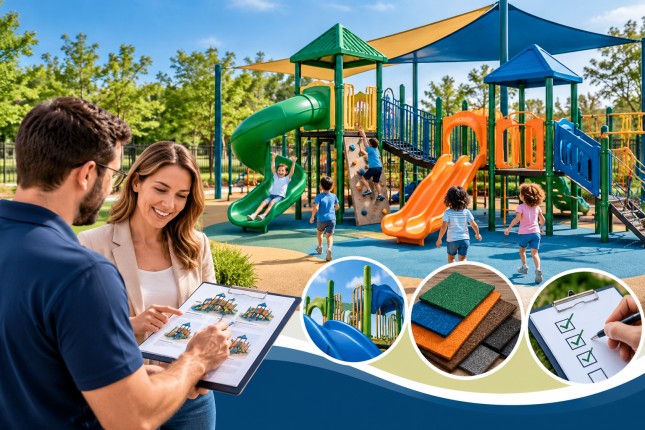
A commercial playground is more than a collection of slides, climbers, and activity panels. It is a long-term investment in children’s play, safety, accessibility, and community engagement. Whether you are developing a school playground, public park, childcare center, resort, or recreation facility, choosing the right supplier can have a major impact on the project’s success.
What to Look for in a Commercial Playground Supplier
The first step is to identify what your project actually needs. The available space, target age group, expected number of users, site conditions, budget, accessibility goals, and desired play experience should all influence the equipment you choose.
A reliable playground equipment manufacturer should be able to discuss these factors rather than simply presenting a catalogue of standard products. Look for a company with experience designing equipment for commercial environments and a portfolio that demonstrates its ability to handle projects similar to yours.
Product quality is another essential consideration. Commercial playgrounds typically experience considerably more use than residential play areas, so equipment needs to withstand frequent activity and outdoor exposure. Ask about the materials used for structural components, decks, slides, panels, fasteners, coatings, and other parts.
Durability also affects the long-term cost of ownership. A product with a higher initial price may prove more economical if it lasts longer and requires fewer repairs or replacements.
Safety and Compliance
Safety should remain a central part of your purchasing decision. Before selecting a supplier, ask which applicable playground safety standards and guidelines its products are designed to address.
Request relevant technical documentation and installation information where appropriate. You should also consider fall heights, use zones, protective surfacing, guardrails, barriers, openings, pinch points, moving components, and age-appropriate design.
Installation is just as important as equipment quality. Improper assembly can affect the performance and safety of even well-designed products. Find out whether the supplier provides professional installation or works with qualified installation teams.
Accessibility should also be incorporated into the planning process. Depending on the project, accessible routes, transfer systems, inclusive play components, and appropriate surfacing may help create a play environment that accommodates children with different abilities.
A reputable playground equipment manufacturer should be willing to explain how its designs address safety and accessibility rather than leaving the buyer to figure everything out after purchase.
Comparing Cost, Design, and Long-Term Value
Price is naturally a major consideration, but comparing commercial playground equipment based only on the initial quotation can be misleading. Two proposals with similar prices may differ substantially in what they include.
Ask for a detailed quotation covering equipment, delivery, installation, surfacing, site preparation, customization, and any other project-related costs. This makes it easier to identify expenses that might otherwise appear later in the process.
Customization can also affect the final price. Some facilities need equipment designed around unusual site dimensions, specific themes, brand requirements, or particular age groups. If customization is important to your project, ask about available design options and whether the supplier can provide drawings or layouts before manufacturing begins.
Warranty, Maintenance, and Customer Support
A commercial playground is a long-term asset, so after-sales support deserves as much attention as the initial purchase. Ask how long the warranty lasts and which components it covers. Find out whether defects, structural components, finishes, and other parts have different warranty periods.
Replacement parts are another practical consideration. Even durable equipment may eventually require maintenance because of normal wear, vandalism, weather exposure, or heavy use. A supplier that can provide replacement components can help extend the useful life of your playground.
Maintenance requirements should also be clear before installation. Ask about recommended inspections, cleaning, tightening of hardware, surface maintenance, and replacement schedules.
The reputation of the playground equipment manufacturer can provide additional insight. Look for established project references, customer reviews, photographs of completed installations, and evidence of ongoing support. If possible, speak with organizations that have purchased similar equipment and ask about their experience with quality, installation, responsiveness, and maintenance.
How to Make the Final Decision
Once you have shortlisted potential suppliers, compare them using consistent criteria. A simple evaluation can include product quality, safety, design flexibility, accessibility, installation, warranty, maintenance, customer service, delivery times, and total project cost.
Do not hesitate to ask questions about anything that appears unclear in a proposal. A professional supplier should be able to explain its products, processes, pricing, and project requirements in straightforward language.
You should also consider whether the supplier understands the environment in which the equipment will be installed. A school playground, municipal park, campground, resort, and childcare center can have very different requirements.
For facilities incorporating splash pads or aquatic play features, additional considerations may include water management, drainage, slip resistance, durable materials, accessibility, sanitation, and ongoing maintenance. Working with a company experienced in waterplay environments can help address these requirements during the planning stage rather than after construction begins.
Ultimately, the right playground equipment manufacturer should offer more than attractive equipment. Look for a partner that understands your goals, prioritizes safety, provides durable solutions, communicates clearly, and remains available after installation.
FAQs
- What should I consider when choosing a commercial playground supplier?
Consider product quality, safety, applicable standards, durability, accessibility, customization, installation, warranty coverage, maintenance requirements, replacement parts, customer service, and the total project cost. - How can I determine whether playground equipment is durable?
Ask about construction materials, protective finishes, expected service life, manufacturing processes, maintenance requirements, and replacement-part availability. Reviewing comparable completed projects can also provide useful insight. - Should commercial playground equipment be customized?
Customization can be useful when you have specific space limitations, design requirements, themes, accessibility goals, or user needs. Discuss your site and objectives with the supplier to determine whether customized equipment is worthwhile. - Why is professional installation important?
Proper installation helps ensure that equipment is assembled and positioned according to the manufacturer’s requirements. Incorrect installation can affect stability, use zones, performance, and overall safety. - What should a playground equipment warranty cover?
Warranty coverage varies by supplier. Review the duration, covered components, exclusions, labour provisions, and claim process before purchasing, and ask how replacement parts are handled after installation.
Planning a commercial playground or waterplay environment? Oasis Waterplaygrounds can help you explore durable, engaging solutions tailored to your facility and project goals. Contact the team to discuss your requirements and take the next step toward creating an exciting play environment.