


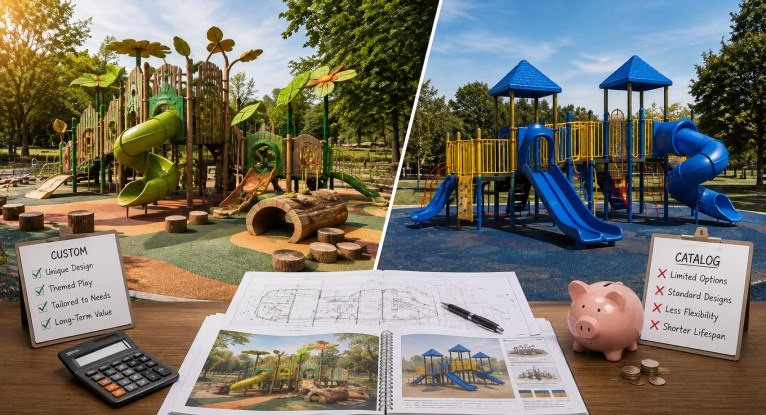
Choosing playground equipment is about more than picking structures that look fun and appealing. The right choice needs to balance safety, available space, budget, age-appropriate play, durability, and the overall goals of your project. Custom and catalog equipment can both deliver excellent results, but understanding their differences can make the buying decision much easier.
Custom Playground Equipment: Flexibility With a Higher Investment
Custom playground equipment is designed around the specific requirements of a project rather than selected from a standard product catalogue. This approach can be particularly useful when a playground has an unusual layout, a specific theme, or unique accessibility requirements.
One of the biggest advantages of custom equipment is flexibility. A custom design can make better use of an irregularly shaped site and incorporate specific colors, themes, play activities, or features. It can also help create a distinctive environment that feels different from a standard playground.
Working with an experienced playground equipment manufacturer can make the customization process more practical. The manufacturer can help determine which features are suitable for the available space and intended users while considering safety and usability.
However, customization usually comes with additional costs. Design work, specialized components, engineering, materials, and production requirements can increase the overall price. Custom projects may also take longer to manufacture and install compared with standard equipment.
Advantages and Limitations of Catalog Equipment
Catalog playground equipment consists of pre-designed structures and components that are already part of a manufacturer’s standard product range. Because these products have established designs, they can generally be selected and ordered more quickly.
One major benefit is predictable pricing. Buyers can compare standard models and choose equipment that fits their budget without paying for extensive design work. Catalog products may also have established specifications, making it easier to plan installation and understand the required space.
For projects with straightforward layouts and standard requirements, catalog equipment can provide excellent value. Schools, parks, childcare facilities, and recreational areas may find that an existing design meets their needs without requiring extensive customization.
The main limitation is flexibility. A standard structure may not fit perfectly into an unusual site or may lack certain features a project owner wants. There can also be fewer options for creating a highly distinctive theme or experience.
Comparing Costs, Design, and Project Timelines
Cost is often one of the first considerations when deciding between custom and catalog equipment. However, the cheapest initial option is not necessarily the most cost-effective choice over the entire life of a playground.
Catalog equipment can offer a more straightforward purchasing process and relatively predictable expenses. Since the designs and components are already established, production and installation may require less time and planning.
Custom equipment can involve greater upfront investment, but it may provide better value when a project has specific design requirements. For example, making full use of an unusual space can help avoid wasted areas and create a more engaging play environment.
A reputable playground equipment manufacturer can explain the cost differences between standard and custom solutions. Ask for a detailed quotation that includes equipment, design, shipping, installation, surfacing, and any other project-related expenses.
Which Option Is Right for Your Playground?
The best option depends on what the playground needs to accomplish. If you have a straightforward site, a limited budget, and a relatively quick project timeline, catalog equipment may be the practical choice.
Custom equipment may be more suitable when creating a unique play environment is a priority or when the site has unusual dimensions. It can also be worth considering when the project requires specialized activities or a particular visual theme.
Before making a decision, evaluate the site’s dimensions, expected users, budget, desired features, accessibility considerations, and maintenance requirements. Discussing these factors with a playground equipment manufacturer can help identify a solution that balances creativity, safety, and long-term value.
FAQs
- Is custom playground equipment more expensive than catalog equipment?
Generally, custom equipment costs more because it may require specialized design, engineering, materials, and manufacturing. However, the final price depends on the project’s specifications. - How long does custom playground equipment take to manufacture?
Custom projects can take longer than catalog equipment because they may involve additional design, approval, engineering, and production stages. - Is catalog playground equipment a good option for small spaces?
Yes. Catalog equipment comes in various sizes and configurations, allowing buyers to select products designed for different site dimensions and age groups. - Can catalog playground equipment be customized?
Some catalog products may offer options such as different colors, configurations, or components. The available choices depend on the manufacturer and product range. - How should I decide between custom and catalog equipment?
Consider your budget, site conditions, desired features, timeline, and long-term goals. Comparing these factors can help determine which solution provides the best fit.
Ready to explore the right playground solution for your project? Contact Oasis Waterplaygrounds to discuss your space, goals, and equipment requirements with a team that can help bring your vision to life.