


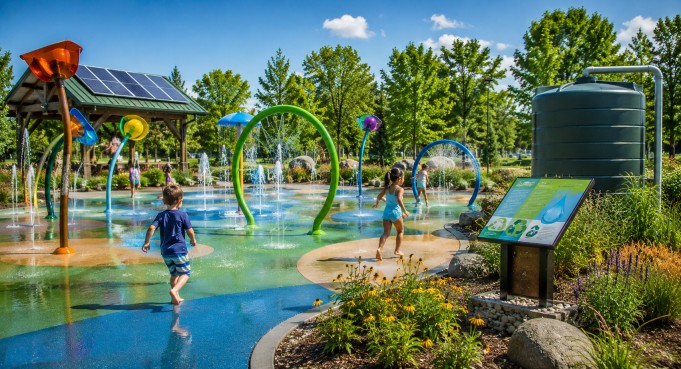
Designing a modern splash pad requires thoughtful planning that balances fun, safety, and environmental responsibility. Communities across the US are increasingly prioritizing greener recreation spaces, and that shift is transforming how outdoor water-play environments are developed. The goal is to build an eco-friendly splash pad that delivers joyful play while reducing waste, energy consumption, and long-term maintenance costs.
The Role of Water Conservation in Sustainable Splash Pad Design
A major component of an eco-friendly splash pad is reducing the amount of fresh water used during operation. Older spray parks relied heavily on once-through systems, but today’s facilities incorporate water recirculation to filter and reuse the same water repeatedly. With proper UV and chlorine treatment, water recirculation systems maintain health standards while lowering operating costs. These systems are now considered essential infrastructure for municipalities aiming to be resource-conscious.
Incorporating Sustainable Fountains and Smart Engineering
To further reduce consumption, designers now rely on sustainable fountains that use lower pressure, efficient sequencing, and highly durable materials. These sustainable fountains are engineered to optimise play value while managing output responsibly. Their long-lasting construction also lowers environmental impact by reducing the frequency of replacements. As demand for environmental stewardship grows, sustainable fountains have become the backbone of modern splash pad builds.
Eco-Friendly Design Elements Beyond Water Systems
Beyond mechanical systems, sustainable splash pads integrate naturally into their surrounding landscapes. Permeable surfaces, native plants, thoughtful shading, and efficient drainage all reduce heat, preserve moisture, and improve user comfort. These choices make an eco-friendly splash pad feel like a seamless extension of the park space rather than a separate installation.
Automated Controls and Smart Water Recirculation
Advanced water recirculation systems can also adjust in real time to the number of users. Automated sensors regulate water flow to avoid unnecessary energy use when the play area is empty. This strategy helps extend equipment life and supports municipalities in meeting environmental targets.
Community Education and Long-Term Sustainability
Educating visitors about the importance of conservation plays a vital role in maintaining a splash pad’s sustainability. Clear signage explaining water recirculation, the purpose of sustainable fountains, and the value of an eco-friendly splash pad helps build respect for the facility and encourages responsible usage.
Designing for the Future of Community Recreation
Sustainable splash pad development demands thoughtful engineering, climate awareness, and an understanding of local community needs. When done well, these spaces provide year-round value and become beloved community gathering points. By integrating water recirculation, prioritizing sustainable fountains, and building with eco-conscious materials, cities can invest in long-lasting public spaces that respect environmental limits.
If your community is ready to build or upgrade a splash pad that prioritizes conservation, safety, and long-term value, Oasis Water Playgrounds can help. We specialize in designing environmentally responsible water-play environments built for generations to enjoy. Reach out today to begin your project.