


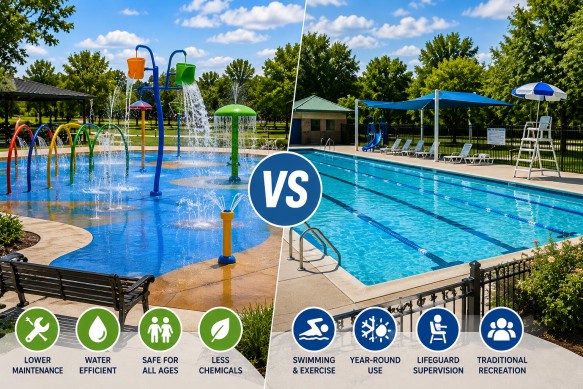
Designing a public park involves making thoughtful decisions that balance safety, cost, and community appeal. One of the most debated choices is whether to install a splash pad or a traditional swimming pool. Both options offer water-based recreation, yet they differ significantly in terms of maintenance, accessibility, and long-term value. For municipalities and developers, understanding these differences is key to creating a space that serves a wide range of visitors.
Understanding the Core Differences
A swimming pool is a familiar feature, offering depth for swimming, diving, and structured activities. It typically requires lifeguards, fencing, and strict supervision. In contrast, commercial splash pads are zero-depth water play areas designed with interactive sprays, jets, and fountains. They eliminate the risk associated with standing water, making them more approachable for families with young children.
Many park planners today are leaning towards commercial splash pads because they provide inclusive, low-risk entertainment. At the same time, experienced splash pad contractors can tailor designs to suit various park sizes and themes, ensuring a unique experience for visitors.
Safety and Accessibility Considerations
Safety is often the top priority for public parks. Swimming pools come with inherent risks, including slips, falls, and drowning hazards. These risks require trained lifeguards and constant monitoring, which adds to operational complexity.
On the other hand, commercial splash pads are designed to be safer environments. Since there is no standing water, the likelihood of drowning is virtually eliminated. This makes them particularly appealing for younger children and seniors. Skilled splash pad contractors also incorporate non-slip surfaces and accessible layouts, ensuring that individuals of all abilities can enjoy the space comfortably.
Installation and Initial Costs
From a financial perspective, both options require a significant upfront investment. Swimming pools typically involve excavation, structural construction, filtration systems, and safety features such as fencing and locker facilities. These elements can drive costs quite high.
In comparison, commercial splash pads generally have a more flexible cost range. Smaller installations can be developed at a lower budget, while larger, themed designs may cost more depending on complexity. Partnering with experienced splash pad contractors helps ensure accurate budgeting and efficient use of resources from the beginning.
Maintenance and Operational Expenses
Maintenance is another critical factor that influences long-term decision-making. Swimming pools require daily cleaning, chemical balancing, and continuous monitoring to maintain water quality. Staffing costs, including lifeguards and maintenance personnel, further increase ongoing expenses.
Commercial splash pads, while not maintenance-free, are easier to manage. Many systems use automated controls and recirculation technology to maintain water quality. Routine inspections and cleaning are still necessary, but the overall effort and cost are typically lower. Knowledgeable splash pad contractors can recommend systems that optimize water usage and reduce long-term operational expenses.
User Experience and Community Appeal
Public parks are meant to attract diverse groups of visitors. Swimming pools appeal to those who enjoy swimming as a sport or leisure activity. However, they may not be suitable for very young children or individuals who are not comfortable in deep water.
Commercial splash pads create a more inclusive environment. Their interactive features encourage free play and social interaction, making them popular among families. With creative designs and vibrant layouts, they often become focal points within parks. Working with skilled splash pad contractors allows communities to incorporate themes and features that reflect local culture and preferences.
Environmental Impact and Sustainability
Sustainability is becoming increasingly important in public infrastructure projects. Swimming pools can consume large amounts of water and energy, especially when heating systems are involved.
Modern commercial splash pads are often designed with eco-friendly systems that recycle water and minimize waste. These features not only reduce environmental impact but also lower operational costs over time. Experienced splash pad contractors can guide park planners in selecting sustainable solutions that align with environmental goals.
Flexibility in Design and Space Usage
Another advantage of splash pads is their flexibility. They can be installed in parks of various sizes, from small neighbourhood spaces to large recreational areas. Their modular design allows for future expansions or upgrades.
Swimming pools, on the other hand, require a dedicated space and are less adaptable once constructed. This makes commercial splash pads a more versatile choice for evolving community needs. With the expertise of reliable splash pad contractors, parks can create dynamic spaces that grow alongside their communities.
Make the Right Choice with Oasis Waterplaygrounds
Choosing between a splash pad and a swimming pool ultimately depends on your park’s goals, budget, and target audience. If you are looking for a safe, inclusive, and cost-effective solution, splash pads are an excellent option. Oasis Waterplaygrounds specializes in designing and delivering high-quality water play solutions tailored to public spaces. Connect with Oasis Waterplaygrounds today and bring a vibrant, engaging water experience to your community.