


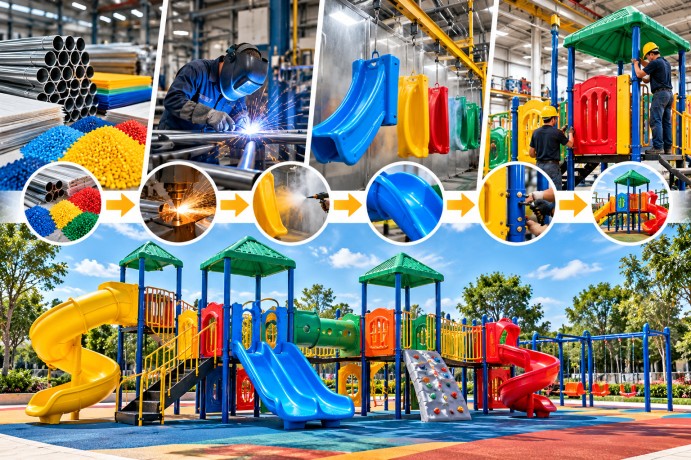
A playground may look simple once it is installed, but creating safe and durable equipment involves many carefully planned stages. From selecting appropriate materials to fabricating components and completing quality checks, every step contributes to the finished play experience.
Material Selection and Product Design
The manufacturing process begins well before metal is cut or plastic is molded. A playground equipment manufacturer first considers the purpose of the equipment, the intended age group, available space, design requirements, and applicable safety considerations.
Different components may require different materials. Steel is commonly considered for structural elements because of its strength and durability, while plastic can be used for slides, panels, interactive features, and other components. Wood may also be incorporated into certain playground designs.
Material selection involves more than simply choosing a strong material. Manufacturers need to consider how materials will perform outdoors, including their resistance to weather, regular use, moisture, and general wear. The selected materials should also be suitable for the manufacturing methods required for each component.
Once the materials and basic requirements are established, the design takes shape. Modern playgrounds can include climbing structures, slides, bridges, platforms, swings, balance features, and interactive elements. Designers consider how these features will work together while allowing children to move through the play area naturally.
Detailed drawings and digital models can help manufacturers visualize dimensions, connections, clearances, and individual components before production begins. This planning stage can identify potential design issues early, when adjustments are easier to make.
Fabrication, Assembly, and Finishing
After the design is finalized, raw materials move into the fabrication stage. Depending on the product, this can involve cutting, bending, drilling, welding, molding, or other manufacturing processes.
For metal components, steel or other selected materials may be cut to specified dimensions and formed into the required shapes. Welding can then be used to join structural sections and create frames or supports. Each connection needs to be produced consistently because structural integrity is an important part of the finished product.
Plastic components follow a different production route. Depending on their shape and material, they may be molded or formed using specialized manufacturing techniques. Large components such as slides can require precise molds to achieve consistent dimensions and smooth surfaces.
Once individual components have been produced, they may be assembled into larger sections. Hardware, brackets, connectors, panels, platforms, and other parts are fitted according to the product design. A playground equipment manufacturer may assemble certain components at the production facility while leaving larger sections for assembly at the installation site.
Finishing is another important stage. Metal surfaces may receive protective coatings designed for outdoor use, helping the equipment withstand exposure to the elements. Surface treatments and coatings can also contribute to the appearance of the finished equipment.
Before moving forward, components are checked for issues such as sharp edges, incomplete welds, surface defects, incorrect dimensions, or damaged finishes. Identifying problems at this point helps prevent unsuitable components from reaching the final installation stage.
Quality Checks and Final Preparation
Quality control continues after fabrication and assembly. A playground equipment manufacturer can inspect finished components and assembled sections to confirm that they correspond with the approved design and required specifications.
Checks may include measurements, connections, moving parts, surface finishes, hardware, and other construction details. Manufacturers may also review documentation related to materials, production procedures, and applicable safety requirements.
Testing requirements can vary depending on the type of playground equipment and the standards applicable to the project. Equipment intended for commercial, educational, municipal, or residential settings may have different specifications to consider.
Packaging and transportation also require planning. Playground equipment often consists of large components that need to be protected during handling and shipping. Components may be labelled and organized to make installation more straightforward once they arrive at the destination.
At the installation site, the equipment is assembled according to the manufacturer’s instructions. The surrounding area may also require appropriate surfacing, clearances, drainage, access routes, and other site-specific considerations.
The manufacturing process therefore does not end when the final component leaves the factory. Good planning, accurate installation, and appropriate ongoing maintenance all contribute to the equipment’s long-term performance.
For organizations planning a new playground, understanding this process can make it easier to ask informed questions about materials, construction methods, finishes, maintenance, lead times, and installation requirements. Working with an experienced playground equipment manufacturer can also help turn an initial concept into a practical play environment suited to the site’s needs.
FAQs
- What materials are commonly used to make playground equipment?
Steel, plastic, and wood are commonly used, depending on the equipment design and intended application. - What happens before playground equipment is manufactured?
Manufacturers typically review the design, intended use, dimensions, materials, site requirements, and applicable safety considerations. - How are metal playground components made?
Metal components can be cut, formed, drilled, welded, and finished before being assembled into larger structures. - Why is finishing important for playground equipment?
Appropriate finishes can protect materials from outdoor conditions while contributing to the equipment’s appearance and longevity. - Does manufacturing include playground installation?
Manufacturing and installation are separate stages, although manufacturers may provide installation instructions, support, or installation services depending on the project.
Bring Your Playground Concept to Life
Planning a new playground or upgrading an existing recreation space? Oasis WaterPlaygrounds can help you explore equipment and design solutions suited to your project. Contact the team to discuss your requirements and start planning your next play environment.