


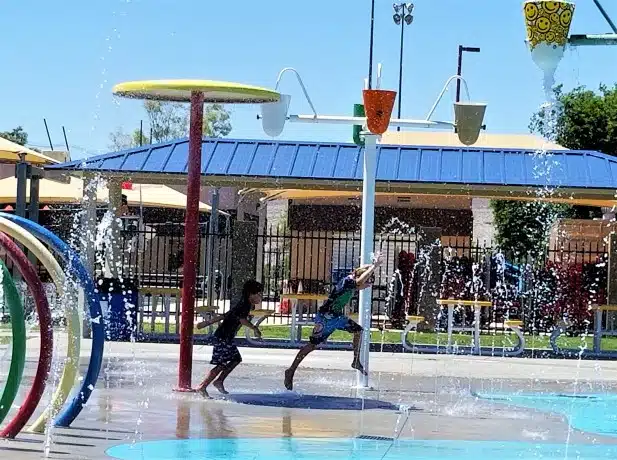
The reduction of water waste recently became one of the highest priorities for communities, municipalities, and developers in the US. The growing popularity of outdoor recreation areas like splash pads has increased the responsibility to design and operate them in a more sustainable manner. It is important to understand how to properly conserve water in order to achieve cost savings and have an environmentally friendly play area for families. Split the content into many statements.
When it comes to splash pads, water is often the largest ongoing expense. Flow-through systems continuously draw fresh water and send used water directly into the drainage system, which increases both water bills and wastewater charges. A sustainable splash pad instead focuses on retaining, filtering, and reusing water within a closed loop, significantly minimizing waste. With municipalities facing higher utility rates and frequent drought restrictions, the construction of water conservation playgrounds has become a solution that helps balance public recreation with a commitment to environmental stewardship.
Designing for Water Efficiency
Water savings begin at the design phase. Engineers must consider tank sizes, pump efficiency, feature selection, and surface slope to ensure every drop of water is captured and reused appropriately. Choosing the right equipment is critical for ensuring that the system supports the long-term function of a sustainable splash pad. Features that use lower spray volumes or adjustable flow settings allow operators to control water output based on daily visitor traffic. By integrating sensor-based activators, splash elements will only run when children are actively playing, reducing wasted water during low-use periods.
Another essential design strategy involves ensuring proper grading and drainage. The surface must be carefully shaped so water flows quickly and efficiently toward drains without pooling or running off into surrounding landscaping. Proper drainage also prevents contamination and supports the closed-loop system needed for water conservation playgrounds. The use of slip-resistant surfacing reduces safety hazards, while sealed joints minimize leakage. When these components work together, the splash pad becomes far more efficient to operate across the season.
Maintenance Practices That Prevent Waste
Even the best-designed system can waste water if poorly maintained. Regular maintenance ensures that pumps, filters, drains, and sanitation equipment function properly throughout the season. Small issues—like a clogged filter or a worn gasket—can quickly lead to unnecessary water loss. Operators must follow detailed maintenance schedules that include inspecting the filtration system, checking drainage inlets, and monitoring pump performance.
For a sustainable splash pad to function at its best, the filtration system must remain clean and efficient. Filters that are overdue for backwashing become less effective and force pumps to work harder, increasing energy costs. Likewise, untreated leaks can gradually drain tanks, leading to higher water usage and inconsistent performance. By implementing a proactive maintenance plan, operators can preserve system efficiency and prolong equipment lifespan.
Routine water-quality testing also ensures that chemical levels remain balanced. When sanitation systems work effectively, water can be reused safely for longer periods. This aligns perfectly with the goals of water conservation playgrounds, where public health and sustainability go hand in hand. Staying ahead of maintenance needs ultimately supports lower operating costs, fewer repairs, and a longer operational season.
Educating Communities and Encouraging Environmental Responsibility
Sustainability efforts are most successful when communities are informed and involved. Educating the public about how water-saving systems work helps build appreciation for the investment made in local recreation spaces. Signage around the splash pad can highlight that the facility is designed as a sustainable splash pad and explain how recirculation systems conserve water and support environmental goals.
When families understand the purpose of water conservation playgrounds, they often become more supportive of initiatives like shorter operating hours or seasonal maintenance closures. They also develop a sense of pride in their community’s environmental leadership. Encouraging positive behavior—such as using garbage bins, keeping food away from features, and reporting visible leaks—contributes to a cleaner, more efficient playground.
Some municipalities host educational events or partner with schools to promote sustainability. These programs inspire children to understand water as a valuable resource, reinforcing community-wide awareness of conservation. This collective mindset helps ensure that splash pads remain not only enjoyable but also environmentally responsible for generations to come.
Investing in Long-Term Operational Savings
Reducing water waste isn’t just about protecting natural resources—it also creates long-term financial benefits. A splash pad that uses less water automatically reduces utility bills, while efficient pumps and smart-control systems help lower power consumption. Over time, these cost savings offset the initial investment in equipment and technology.
Many municipalities find that transitioning to recirculation systems dramatically lowers their annual expenses. A sustainable splash pad also tends to experience fewer breakdowns, fewer chemical imbalances, and fewer interruptions, all of which contribute to a reliable visitor experience. Meanwhile, water conservation playgrounds built with durable materials and well-engineered components tend to require fewer major repairs throughout their lifespan.
As water rates continue to rise, investing in efficient systems becomes increasingly important. Communities that prioritize sustainability today are better positioned for future environmental regulations and climate-related challenges. Good planning now ensures that recreational spaces remain accessible, affordable, and environmentally conscious well into the future.
If you’re looking to build or upgrade a splash pad that prioritizes sustainability and long-term cost savings, Oasis Water Playgrounds is here to help. Our team specializes in eco-efficient design, recirculation systems, and community-focused water-play solutions. Connect with us to create a smarter, greener splash-pad experience for your community.