


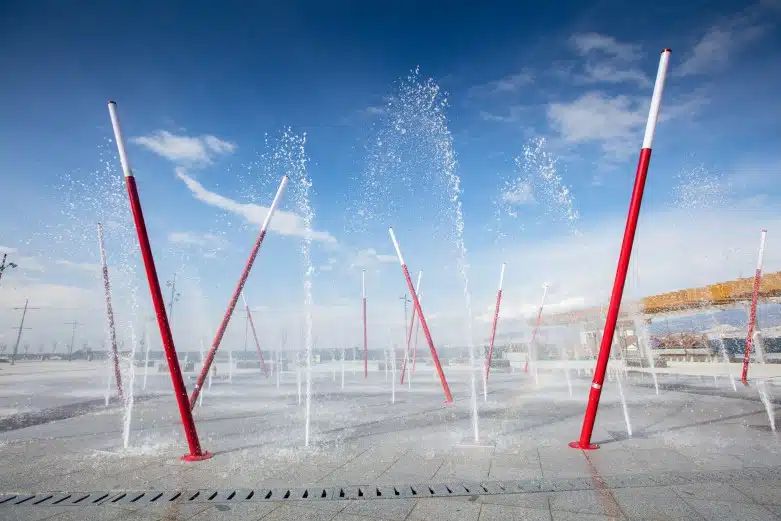
Public play spaces are changing, and that change is long overdue. Communities across the US are recognizing that parks and recreation areas should welcome everyone, regardless of age, ability, or mobility. Splash pads, in particular, have become central gathering spaces for families during warmer months. When thoughtfully planned, they offer joy, relief from heat, and social connection. When poorly designed, they unintentionally exclude the very people public spaces are meant to serve.
Accessibility and compliance are not boxes to tick at the end of a project. They are foundations that shape how children and caregivers experience a space from the moment they arrive. Designing with inclusion in mind ensures that no one is left watching from the sidelines.
Why Accessibility Matters in Water Play
Water play is sensory, social, and joyful. For children with physical, cognitive, or sensory disabilities, splash pads can be one of the most engaging forms of outdoor play. However, that potential only becomes reality when access is built into every layer of the design.
An inclusive splash pad is not defined by a single feature. It is the result of careful planning that considers movement, sensory comfort, visibility, and independence. From smooth transitions and level surfaces to intuitive layouts that reduce confusion, inclusive design creates confidence for both children and caregivers.
When accessibility is prioritized early, it benefits everyone. Parents pushing strollers, grandparents with limited mobility, and children still learning balance all experience a space that feels easier, safer, and more welcoming.
Understanding Compliance Without Losing Creativity
Accessibility standards exist for a reason. They protect users and ensure fairness in public infrastructure. In water play environments, compliance shapes how people enter, move through, and interact with features.
Designing an ADA splash pad does not mean sacrificing creativity or fun. In fact, clear standards often encourage better design decisions. Features are placed more thoughtfully, circulation improves, and play becomes more intuitive. Compliance helps remove physical and social barriers that can quietly limit participation.
When designers understand the intent behind regulations, they are better equipped to create playful spaces that feel natural rather than restrictive. Compliance becomes a design tool, not a limitation.
Layout and Movement: Designing for Independence
Movement is at the heart of play. An accessible water play area must allow users to navigate independently without unnecessary obstacles. Wide pathways, consistent surface textures, and logical circulation patterns all support this goal.
Strong accessible playground design focuses on how people move through space, not just where features are placed. Gradual slopes instead of steps, clear sightlines, and resting areas contribute to a sense of comfort and control. For children using mobility devices, this independence is empowering and deeply meaningful.
A good layout also supports caregivers. When adults can easily supervise without crowding or obstruction, everyone feels more at ease.
Sensory Considerations in Splash Pad Design
Water play is naturally sensory-rich, which can be both exciting and overwhelming. Inclusive splash pads account for this by offering a range of experiences rather than a single intensity level.
A well-planned inclusive splash pad includes quiet zones alongside more energetic areas. Gentle sprays, ground-level features, and predictable water patterns provide options for children who may be sensitive to noise or sudden movement. Clear visual cues help users anticipate what a feature will do before engaging with it.
This layered approach allows children to explore at their own pace, building confidence and enjoyment over time.
Surface Safety and Comfort
Surfaces are often overlooked, yet they are critical to accessibility. Non-slip, shock-absorbing materials reduce the risk of falls while supporting mobility aids and bare feet alike.
In an ADA splash pad, surface selection must balance safety, durability, and ease of movement. Uneven textures, abrupt transitions, or excessive slopes can quickly turn play into frustration. Smooth, continuous surfacing supports freedom of movement and reduces fatigue for users navigating the space.
Comfort also matters. Materials that stay cooler underfoot and drain efficiently improve the overall experience, especially during peak summer use.
Inclusive Features That Encourage Shared Play
True inclusion happens when children play together, not separately. Splash pads offer a unique opportunity to create shared experiences where differences fade into the background.
Thoughtful, accessible playground design incorporates features that can be enjoyed simultaneously by children with varying abilities. Interactive water elements that respond to touch, timing, or movement encourage collaboration rather than competition. These moments of shared discovery foster empathy and social connection.
When inclusion is seamless, children are less aware of differences and more focused on having fun together.
Beyond Minimum Standards
Meeting regulations is essential, but great design goes further. Communities benefit most when designers aim beyond minimum requirements and consider real-world use.
An ADA splash pad that exceeds baseline standards often feels more intuitive and enjoyable for all users. Extra seating, shaded rest areas, clear signage, and family-friendly amenities contribute to a sense of welcome that compliance alone cannot achieve.
By listening to community feedback and observing how spaces are actually used, designers can refine layouts to better serve diverse needs.
Planning for Longevity and Community Use
Inclusive splash pads are not just about today’s users. They are about creating spaces that adapt as communities grow and change. Durable materials, flexible layouts, and timeless design choices ensure long-term value.
A well-executed inclusive splash pad becomes a point of pride, reflecting a community’s commitment to equity and thoughtful planning. These spaces tend to see higher usage, stronger public support, and greater return on investment over time.
Partnering With the Right Expertise
Creating truly inclusive water play environments requires experience, empathy, and technical knowledge. From compliance interpretation to feature selection, every decision matters.
Oasis Water Playgrounds understands how accessibility, safety, and creativity intersect. Their team specializes in accessible playground design that supports compliance while delivering joyful, engaging experiences for all users.
If your community is planning a new splash pad or upgrading an existing one, now is the moment to design with everyone in mind. Reach out to Oasis Water Playgrounds to create water play spaces that welcome every child, support every family, and reflect the values of an inclusive community.